Trademark
Registration in India
Secure your business name, logo, slogan, or brand identity with professional Trademark Registration services. Taxced helps startups, businesses, ecommerce sellers, and growing brands protect their intellectual property across India with a smooth and transparent registration process.
Government Recognized Filing Process
Brand Protection
Expert Trademark Support
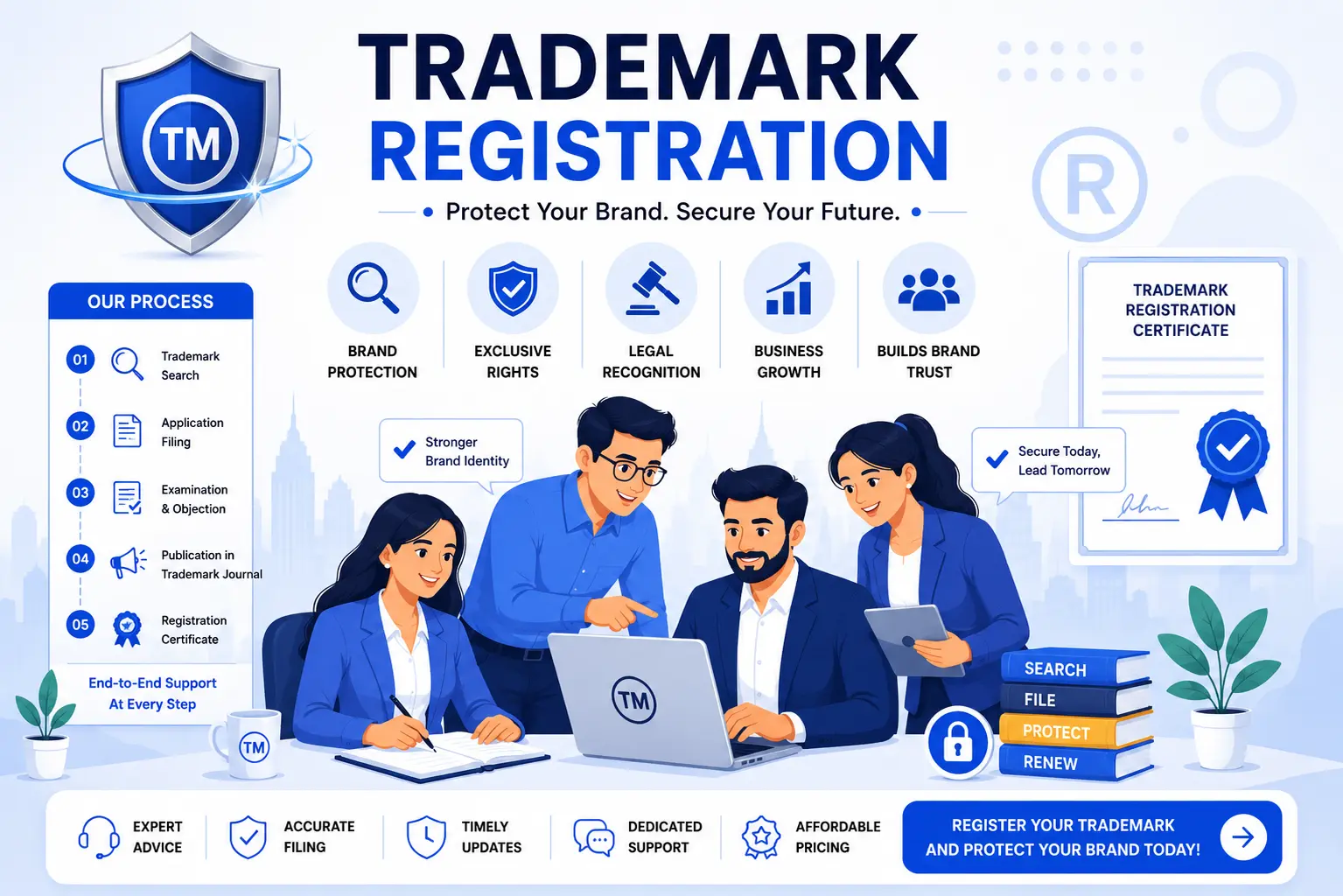
Protect Your Brand Before
Someone Else Claims It
Secure your business name, logo, slogan, or brand identity with professional Trademark Registration services. Taxced helps startups, businesses, ecommerce sellers, and growing brands protect their intellectual property across India with a smooth and transparent registration process.
✔ Brand Protection Across India
✔ Expert Trademark Support
Trademark Registration in India
What is a
Trademark registration?
Trademark Registration is the legal process of protecting your business name, logo, tagline, symbol, or brand identity from unauthorized use by others. It grants exclusive ownership rights and helps distinguish your products or services from competitors in the marketplace. A registered trademark strengthens brand credibility, builds customer trust, and creates a valuable intellectual property asset for your business. It also provides legal protection against infringement and misuse of your brand. For startups, MSMEs, ecommerce sellers, and growing businesses, Trademark Registration is an essential step toward long-term brand protection and business growth
Trademark Registration Allows Businesses To:
Protect their brand name, logo, tagline, and unique identity from unauthorized use.
Gain exclusive legal rights to use the trademark across registered products or services.
Build stronger customer trust and enhance overall brand credibility.
Prevent competitors from copying or misusing their brand identity.
Create a valuable intellectual property asset that supports long-term business growth and expansion.
Benefits of
trademark registration
in india
Trademark Registration is more than just a legal formality—it is an investment in your brand’s future. Whether you’re a startup, ecommerce seller, consultant, or established business, a registered trademark helps protect your identity, strengthen customer trust, and support long-term business growth.
Exclusive Legal Protection
One of the biggest benefits of Trademark Registration is the exclusive legal right to use your brand name, logo, slogan, or symbol. Once registered, you can prevent competitors from using similar branding that may confuse customers and affect your reputation.
Builds Brand Recognition & Trust
A registered trademark helps establish a strong and recognizable brand identity in the marketplace. Customers are more likely to trust businesses that have protected their brand legally, which can improve credibility and customer loyalty over time.
Protection Against Brand Copying
As your business grows, competitors may attempt to imitate your brand name or visual identity. Trademark Registration gives you stronger legal grounds to take action against unauthorized use and helps safeguard the goodwill you have built.
Creates a Valuable Business Asset
A trademark is an intellectual property asset that can increase in value as your business expands. It can be licensed, sold, franchised, or transferred, making it a valuable asset for future business opportunities and investments.
Supports Business Expansion
Whether you are launching new products, entering new markets, or scaling your operations, trademark protection helps maintain brand consistency and ownership. Businesses planning expansion often combine
Essential for Ecommerce & Online Businesses
For ecommerce sellers on platforms such as Amazon, Flipkart, and Shopify, trademark protection is increasingly important. It helps secure your brand identity, supports marketplace verification programs, and strengthens your competitive position in online marketplaces.
Taxced helps startups, MSMEs, ecommerce brands, and growing businesses secure their trademarks with expert guidance, filing support, and end-to-end registration assistance. Protect your brand today and build your business with confidence.
Type of Trademark
Not all trademarks protect the same type of brand identity. Depending on your business requirements, you can register different types of trademarks to safeguard your brand name, logo, products, services, and unique business elements. Understanding these trademark categories helps businesses choose the right protection strategy.
Word Mark
A Word Mark protects the textual representation of your brand name, regardless of font, style, color, or design. It offers one of the broadest forms of trademark protection because it secures the brand name itself rather than its visual appearance.
For Example
If your brand name is Taxced, a Word Mark protects the word "Taxced" in all formats and styles.
Logo Mark
A Logo Mark protects the visual design, symbol, or graphic representation associated with your brand. This type of trademark is useful when your logo plays a major role in your branding and customer recognition.
For Example:
A unique company logo, symbol, or icon used across websites, products, packaging, and marketing materials.
Device Mark
A Device Mark protects a combination of words, graphics, symbols, and design elements used together as a brand identity. It is commonly chosen when businesses want to protect their complete brand presentation rather than just the name.
For Example : A logo containing both the company name and a custom graphic design.
Service Mark
A Service Mark is used by businesses that provide services rather than physical products. It helps distinguish one service provider from another in the marketplace.
Common Users:
Consultants
Marketing Agencies
Software Companies
Legal Firms
Financial Service Providers
Businesses offering professional services often obtain a Service Mark alongside their business registration and GST Registration to establish stronger market credibility.
Product Mark
A Product Mark is used to identify and protect a specific product offered under a brand. It helps consumers recognize products associated with a particular manufacturer or seller.
Common Industries:
FMCG Brands
Consumer Goods
Manufacturing Companies
Ecommerce Businesses
This type of trademark is especially valuable for businesses building product-focused brands.
Combined Mark
A Combined Mark protects both the brand name and logo together under a single trademark application. It offers protection for the complete visual identity being used by the business.
Best For: New startups
Ecommerce brands
Growing businesses
D2C companies
Many businesses choose Combined Marks when they have finalized both their brand name and logo.
Sound Mark
A Sound Mark protects unique sounds or audio signatures associated with a brand. Although less common, some businesses use distinctive sounds as part of their branding strategy.
Examples:
Brand jingles
Startup sounds
Audio branding elements
These sounds become legally protected once registered.
Shape Mark
A Shape Mark protects the distinctive shape of a product or packaging that customers associate with a specific brand.
Examples:
Unique bottle shapes
Distinctive packaging designs
Product-specific shapes
This type of trademark is often used by manufacturing and consumer product companies.
For most startups, small businesses, and service providers, a Word Mark provides the strongest and most flexible protection. Businesses with established branding may also consider Logo Marks or Combined Marks for broader brand security. Choosing the right trademark type early can help prevent legal disputes and strengthen your brand’s long-term value.
Who Should Register a
Trademark
in india
Trademark Registration is essential for any business or individual who wants to protect their brand identity and build long-term value. Whether you’re launching a startup, selling products online, or growing an established business, securing your trademark helps prevent brand misuse and strengthens your market position.
🏢Startups & New Businesses
Startups invest significant time and resources in building their brand identity. Registering a trademark at an early stage helps protect the business name, logo, and brand reputation from potential infringement while creating a strong foundation for future growth.
🛒 Ecommerce Sellers
Businesses selling on platforms such as Amazon, Flipkart, Meesho, and Shopify should consider Trademark Registration to protect their brand and product identity. A registered trademark can improve credibility, support brand verification programs, and help sellers stand out in competitive marketplaces.
🏢 MSMEs & Small Businesses
Small and medium-sized businesses often rely heavily on their brand reputation to attract customers. Trademark protection helps secure the goodwill they build over time and prevents competitors from using similar names or branding elements.
💼 Consultants & Service Providers
Consultants, agencies, freelancers, legal professionals, and financial advisors can benefit from trademark protection by securing their business names and service brands. A registered trademark helps create a professional image and builds trust among clients.
🏭 Manufacturers & Product-Based Businesses
Manufacturers invest heavily in product development, packaging, and marketing. Trademark Registration protects product names, logos, and brand identity, helping businesses differentiate themselves in the marketplace and build customer loyalty.
🍽️ Restaurants, Cafes & Food Brands
Restaurants and food businesses often grow through brand recognition and customer trust. Registering a trademark protects the business name, logo, and unique brand identity from being copied by competitors.
🎨 Content Creators & Personal Brands
Influencers, coaches, trainers, YouTubers, and content creators increasingly operate as businesses. Trademark protection helps secure personal brand names, course names, and digital product brands as their audience and business grow.
🌐 Growing Businesses Planning Expansion
Businesses planning to expand into new cities, states, or markets should secure their trademark early. Trademark protection ensures that the brand remains legally protected as the business scales and explores new growth opportunities. Many businesses combine Trademark Registration with One Person Company Registration or Private Limited Company Registration to build a stronger legal foundation for expansion.
If your business has a unique name, logo, tagline, product, or service identity that you want to protect, Trademark Registration is highly recommended. It not only safeguards your brand from misuse but also creates a valuable intellectual property asset that supports long-term business growth and credibility.
Documents Required for
Trademark Registration
in india
Trademark Registration requires a few basic documents to verify the ownership of the brand and complete the application process successfully. Keeping these documents ready helps avoid delays and ensures smooth trademark filing with the Trademark Registry.
Essential Documents Trademark Registration in India
PAN Card of the Applicant
The PAN Card serves as the primary identity proof of the applicant and is required for trademark filing. Whether the application is filed by an individual, startup, company, LLP, or partnership firm, PAN details help establish ownership and complete the registration process accurately.
Aadhaar Card or Identity Proof
A valid identity proof is required to verify the applicant’s identity and ensure compliance with trademark filing requirements. Documents such as Aadhaar Card, Passport, Voter ID, or Driving License are generally accepted for this purpose.
Address Proof
The applicant must provide a valid address proof to confirm their residential or business address. Utility bills, bank statements, passport copies, or other government-issued address documents are commonly accepted during the registration process.
Brand Logo
If you are registering a logo trademark, a clear digital copy of the logo must be submitted along with the application. Protecting a logo helps businesses secure their visual identity and strengthen brand recognition in the marketplace.
User Affidavit
In cases where the trademark is already being used in business, a user affidavit and proof of usage may be required. This helps establish prior usage rights and strengthens the trademark application.
Email Address & Mobile Number
A valid email address and mobile number are required for application updates, verification, and official communication from the Trademark Registry. These contact details help applicants track the progress of their trademark application efficiently.
Power of Attorney (TM-48)
When a trademark application is filed through an authorized trademark consultant or representative, a signed Power of Attorney (Form TM-48) may be required. This document authorizes the representative to act on behalf of the applicant during the registration process.
Need Help with Trademark Documentation?
Taxced assists startups, MSMEs, ecommerce sellers, and growing businesses with document verification, trademark filing, objection handling, and end-to-end Trademark Registration support. Our experts ensure that your application is prepared accurately and submitted without unnecessary delays.
Taxced helps entrepreneurs prepare, verify, and organize all required documents for Partnership Firm registration in India. Our experts ensure accurate documentation, faster processing, and smooth registration support from start to finish.
Common Document Issues to Avoid
Make sure all documents are clear, valid, and match your Trademark details. Mismatched PAN, incorrect address proof, or blurred uploads are common reasons for Trademark Registration rejection in India.
|
Document Type
|
Mandatory?
|
|---|---|
How your
Trademark Becomes
Protected Brand™
Trademark Registration is not just a filing process—it’s the journey of transforming your business name, logo, or brand identity into a legally protected asset. Here’s how Taxced helps secure your brand from application to registration.

Brand Availability
Check
We Conduct a thorough search to ensure your brand name or logo is unique and availble for registration
Outcome
Search Report &
Risk Assessment

Choosing the Right
Trademark Class
we identify the correct class for your business to ensure maximum legal protection
Outcome
Correct Classification &
Strong Protection

Trademark Application
Filing
We prepare and file your trademark application with Trademark Registry, Government of India.
Outcome
Application Number
Issued

Examination &
Objection Support
We handle examination objections and provide expert responses to keep your application moving forward.
Outcome
Search Report &
Risk Assessment

Trademark Journal
Publication
Your Trademark is published in the journal for public review, allowing others to raise opposition if any.
Outcome
Correct Classification &
Strong Protection

Trademark Registration
Certificate
After Successful Completion of all stages, you receive your Trademark Registration Certificate.
Outcome
Application Number
Issued
A trademark is much more than a logo or business name—it becomes a valuable intellectual property asset that grows alongside your business. Many founders secure their trademark early while setting up their business structure through Private Limited Company Registration to create a strong legal foundation from day one.
Trademark Classes
Explained
Trademark Registration in India is divided into different classes based on the type of products or services a business offers. Selecting the correct trademark class is one of the most important steps in the registration process because your trademark protection is limited to the class in which it is registered.
What Are Trademark Classes?
The Trademark Registry has categorized goods and services into 45 different classes. Classes 1–34 cover products and goods, while Classes 35–45 cover services. Businesses must choose the appropriate class to ensure their trademark receives the right legal protection.
Class 35 – Business & Professional Services
Class 35 is one of the most popular trademark classes and covers advertising, business management, consultancy, marketing, recruitment, and commercial services. Common Examples: Business Consultants Marketing Agencies Recruitment Firms Ecommerce Marketplaces This class is often suitable for startups and service-based businesses.
Class 45 – Legal & Compliance Services
Class 45 covers legal, compliance, intellectual property, and security-related services. Common Examples: Legal Consultants Trademark Consultants Compliance Service Providers Corporate Legal Advisors Since Taxced provides legal and compliance-related services, this class may be relevant for certain offerings.
Class 36 – Financial & Taxation Services
Class 36 covers financial services, taxation consultancy, accounting support, investment services, and insurance-related activities. Common Examples: Chartered Accountants Tax Consultants Financial Advisors Virtual CFO Service Providers Businesses offering taxation and financial advisory services often register trademarks under this class.
Class 42 – Technology & Software Services
Class 42 protects technology-driven businesses that provide software, SaaS platforms, web applications, IT consulting, and technology development services. Common Examples: SaaS Companies Software Development Firms IT Consultants Technology Startups
Class 35 & Ecommerce Brands
Online sellers and ecommerce businesses often require trademark protection under Class 35 because they provide retail, wholesale, and online marketplace services. This is especially important for businesses selling through Amazon, Flipkart, Shopify, and other digital platforms.
Product-Based Businesses
Manufacturers and product brands typically register under classes related to the products they sell. Examples: Cosmetics → Class 3 Clothing → Class 25 Food Products → Class 30 Pharmaceutical Products → Class 5 The appropriate class depends on the nature of the product being marketed.
Can You Register in Multiple Classes?
Yes. Businesses offering multiple products or services can file trademark applications in more than one class. This provides broader protection and ensures that competitors cannot misuse your brand in related industries.
For example, a company offering both accounting services and business consulting may require protection under multiple trademark classes.
Choosing the Right Class Matters
Filing under the wrong class can result in limited protection, objections, or future legal challenges. That’s why professional trademark guidance is essential before submitting an application. Taxced helps businesses identify the most appropriate trademark classes based on their products, services, and long-term growth plans.
Common
Trademark Registration
Mistakes to Avoid
Trademark Registration is one of the most important steps in protecting your brand, but many businesses make avoidable mistakes that lead to objections, delays, or even rejection of their application. Understanding these common errors can help ensure a smoother registration process and stronger brand protection.
Skipping the Trademark Search
Many business owners file a trademark application without checking whether a similar trademark already exists. This often leads to objections or rejection by the Trademark Registry.
Choosing the Wrong Trademark Class
Trademark protection is granted only within the class in which the application is filed. Selecting the wrong class can leave your business vulnerable and limit the legal protection of your brand.
Filing Incomplete or Incorrect Information
Small mistakes in applicant details, business information, logo files, or documentation can result in unnecessary delays and examination issues.
Registering Only the Logo and Ignoring the Brand Name
Many businesses focus solely on protecting their logo while leaving their business name unprotected. While logo protection is important, securing the brand name through a Word Mark often provides broader legal protection.
Waiting Too Long to Register
One of the biggest mistakes startups and growing businesses make is delaying Trademark Registration until the brand becomes popular.
Ignoring Trademark Objections
Receiving a trademark objection does not mean the application is rejected. However, many applicants fail to respond properly or within the required timeline.
As businesses expand into new products, services, or markets, trademark protection should evolve accordingly. Many growing companies fail to review whether additional trademark classes or registrations are required.
Compliance & Trademark
Renewal Requirements
Obtaining a Trademark Registration is not the final step in protecting your brand. To maintain exclusive rights and ensure continuous legal protection, businesses must understand the compliance and renewal requirements associated with registered trademarks in India.
Trademark Protection Continues After Registration
Once your trademark is successfully registered, it becomes a valuable intellectual property asset of your business. However, maintaining that protection requires timely renewal and proper monitoring of your trademark rights.
A registered trademark helps protect your brand name, logo, tagline, and business identity from unauthorized use while strengthening your long-term market position.
Trademark Validity Period
A registered trademark in India remains valid for 10 years from the date of registration. During this period, the trademark owner enjoys exclusive rights to use the trademark for the registered products or services.
Unlike many business registrations that require annual renewals, trademarks offer long-term protection with minimal maintenance requirements.
Trademark Renewal Process
To continue enjoying trademark protection, the trademark must be renewed before its validity period expires.
The renewal process helps:
- Maintain exclusive ownership rights
- Prevent loss of trademark protection
- Avoid unnecessary legal complications
- Preserve brand value and market recognition
Timely renewal ensures uninterrupted protection of your intellectual property.
Consequences of Missing Trademark Renewal
Failing to renew a trademark can result in the removal of the trademark from the official register. Once removed, your brand may become vulnerable to misuse, imitation, or registration attempts by other businesses.
This can lead to:
- Loss of exclusive rights
- Brand identity risks
- Customer confusion
- Potential legal disputes
Protecting a trademark is often far less expensive than rebuilding a lost brand identity.
Monitor Unauthorized Trademark Usage
Trademark owners should actively monitor the marketplace for unauthorized use of similar names, logos, or branding elements.
Regular monitoring helps businesses:
- Detect infringement early
- Protect brand reputation
- Maintain market exclusivity
- Take timely legal action when necessary
Strong brand protection goes beyond registration—it requires ongoing vigilance.
Trademark as a Growing Business Asset
As your business grows, your trademark becomes increasingly valuable. A strong trademark can support:
- Franchise opportunities
- Business expansion
- Licensing agreements
- Investor confidence
- Brand valuation
Many businesses secure their trademark alongside Private Limited Company Registration to create a strong legal and commercial foundation for long-term growth.
Expand Trademark Protection as Your Business Grows
If your business expands into new product categories, services, or markets, you may need additional trademark filings under relevant trademark classes.
Regular review of your trademark portfolio helps ensure that your brand remains fully protected as your business evolves.
Why Choose Taxced for
Trademark Registration?
Trademark Registration is a critical step in protecting your brand, and choosing the right partner can make the process faster, smoother, and more reliable.
Startup-Focused Approach
We simplify Trademark registration for modern entrepreneurs and growing businesses.
Expert-Led Assistance
Our professionals guide you throughout documentation, registration, and compliance procedures.
PAN India Service Coverage
We support entrepreneurs and businesses across India.
Compliance-Focused Support
Beyond registration, we assist businesses with ongoing compliance and objection related guidance.
Ready to Start Your
Trademark registration journey?
Get expert assistance for Trademark registration, objection reply, legal compliance, and expert guidance.
Register your Trademark confidently with Taxced.
Trademark Registration FAQs
(common question Answered)
Find answers to common questions about Trademark Registration in India.
What is Trademark Registration?
Trademark Registration is the legal process of protecting a business name, logo, tagline, symbol, or brand identity from unauthorized use by others. Once registered, the trademark owner receives exclusive rights to use the mark for the registered products or services. Trademark Registration in India helps businesses build brand value, establish credibility, and prevent competitors from copying their identity.
Who Can Apply for Trademark Registration in India?
Any individual, startup, entrepreneur, company, LLP, partnership firm, MSME, or business entity can apply for Trademark Registration in India. Whether you are launching a new brand or operating an established business, securing a trademark helps protect your intellectual property and strengthens your market position.
What Can Be Registered as a Trademark?
Businesses can register various brand elements as trademarks, including business names, logos, slogans, taglines, product names, symbols, and unique brand identifiers. Depending on business requirements, applicants can choose between Word Marks, Logo Marks, Device Marks, Service Marks, and other trademark categories.
Is Trademark Registration Mandatory?
Trademark Registration is not legally mandatory in India, but it is highly recommended for businesses that want to protect their brand identity. Without trademark protection, competitors may attempt to use similar names or logos, creating confusion in the market and potentially harming your business reputation.
How Long Does Trademark Registration Take?
The overall Trademark Registration process can take several months depending on examination procedures, objections, and government processing timelines. However, once the application is successfully filed, applicants receive an acknowledgment number that allows them to begin tracking their trademark application status.
How Long is a Trademark Valid in India?
A registered trademark remains valid for 10 years from the date of registration. After the validity period expires, the trademark can be renewed indefinitely every 10 years by completing the renewal process and maintaining compliance with applicable requirements.
Can I Use the ™ Symbol Before Registration?
Yes. Businesses can use the ™ symbol after filing a trademark application, even before receiving final registration approval. Once the trademark is officially registered and the registration certificate is issued, the ® symbol can be used to indicate a legally registered trademark.